28 May 2026 04:35
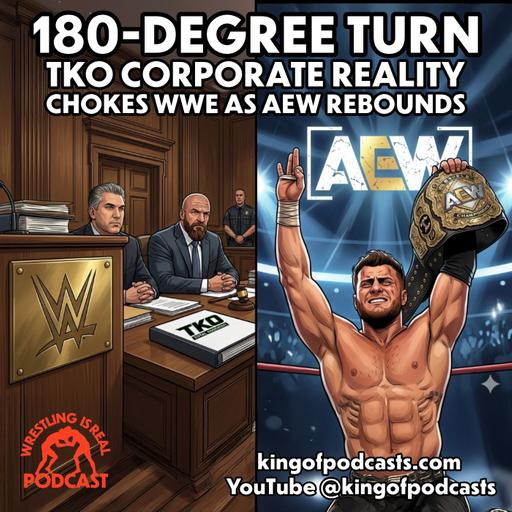
180-DEGREE TURN: TKO’s Corporate Reality Chokes WWE As AEW Rebounds
When World Wrestling Entertainment (WWE) announced its historic multi-billion dollar leap to Netflix, a vocal, hyper-optimistic segment of the fandom declared absolute victory. Safe in the belief that the "Triple H Creative Era" was a flawless, untouchable machine, these fans painted a utopian future: commercial-free premium events, unrestricted edgy content, and global dominance. Anyone suggesting that corporate consolidation might have an underbelly was loudly dismissed as a bitter contrarian.What a difference 18 months and full corporate assimilation can make.Today, that same fandom has executed a staggering 180-degree turn. The honeymoon is officially over. As TKO Group Holdings has fully tightened its grip on WWE’s operational and financial processes, the reality of being a small cog in a massive sports-entertainment conglomerate has set in. WWE finds itself mired in ugly courtroom drama and blistering critical blowback, while its chief competitor, All Elite Wrestling (AEW), is quietly riding a wave of critical adulation by simply remembering what belongs inside the ropes.The cracks in the armor became impossible to ignore by the spring of 2026. For years, fans complained about Vince McMahon's corporate sanitization, believing Endeavor's TKO merger would cure it. Instead, TKO supercharged it.The turning point for many came during April's *WrestleMania 42* in Las Vegas. Longtime combat sports journalist Ariel Helwani put his finger directly on the pulse of a growing fan disillusionment, publicly eviscerating the product as "soulless."Helwani echoed a sentiment felt by thousands of viewers who realized that under TKO, *everything* is for sale. The ring canvas is heavily modified with sponsors, match entrances are stripped down to maximize ad space, and broadcasting flow is butchered by a relentless deluge of commercials. Data compiled by fans after the event revealed a sobering metric: across the two-night showcase, viewers sat through nearly **four and a half hours of advertisements and downtime** compared to just under three hours of actual in-ring wrestling.Compounding the aesthetic frustration is a massive consumer backlash. A recent class-action lawsuit filed in early 2026 accuses WWE of a "bait-and-switch" regarding its domestic streaming migration to ESPN, leaving fans furious after realizing they were forced to shell out an unexpected $29.99 a month just to watch Premium Live Events they thought were covered.Worse than prime-time commercials, however, are the dark legal clouds gathering over the boardroom. The illusion of a completely "cleansed," post-Vince McMahon WWE has evaporated.A high-stakes shareholder lawsuit challenging the initial TKO merger process is headed to trial next month in the Delaware Court of Chancery. The lawsuit alleges that the entire merger was fundamentally compromised—predetermined from the start to protect Vince McMahon following his sexual misconduct scandals rather than maximizing value for shareholders.Just this week, Vice Chancellor J. Travis Laster issued a devastating pre-trial ruling, sanctioning McMahon and current WWE President Nick Khan for destroying evidence. The judge found that Khan, McMahon, and Chief Content Officer Paul "Triple H" Levesque all utilized Signal’s auto-delete function to wipe out messages they had a legal obligation to preserve. Next month, Levesque, Khan, and Ari Emanuel will all be forced to take the witness stand, dragging WWE's top hierarchy back into a public legal quagmire.While WWE battles internal corporate bloat and external judicial scrutiny, Tony Khan’s AEW has spent the first half of 2026 doing exactly what it was created to do: delivering world-class pro wrestling.By blocking out the noise and avoiding the temptation to over-sanitize its product for corporate boardrooms, AEW has quietly put together an extraordinary strin