
21 Oct 2026 10:00
How to Use Eccentric Training for Better Strength & Injury Prevention
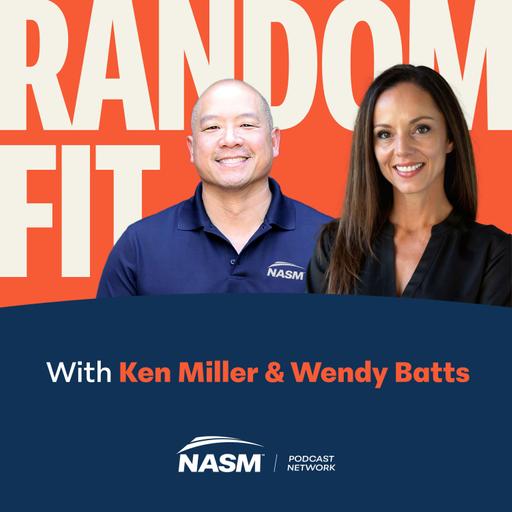
The most important thing to know about eccentric, or "brake," training is that it keeps you safe and strong by teaching your body how to slow down, stop, and control movement—not just speed up or lift heavier. In this “Random Fit,” hosts Wendy Batts and Ken Miller break down why developing your body’s brakes is just as crucial as building its engine, whether you are an athlete, a parent, or someone staying active as you age. The show unpacks why eccentric training—where muscles lengthen under load—is undervalued, what happens in your joints and muscles during these movements, and how it affects performance, injury risk, and daily life (from landing a jump to walking down stairs). Listeners will get practical tips on teaching clients to decelerate, evaluating movement quality, and progressing eccentric work for all fitness levels. You'll learn real-world strategies and progressions for effective eccentric training, as well as methods for assessing control, spotting compensations, and applying these principles in both predictable and unpredictable environments. NASM’s science-based models and approaches for strength and safety are woven throughout, making this episode a resource for coaches, trainers, and fitness enthusiasts who want to master both the art and science of braking. Chapters: 00:00 What is the power of the brake and why does it matter in fitness?01:02 Why is eccentric training important for everyone, not just athletes?03:01 Should you focus on building strength or control first in workouts?04:07 What is eccentric training and how do you cue it for clients? 07:13 What does eccentric control look like in kids or beginners? 09:14 Why do strong people still need to train eccentric strength? 11:14 How does force absorption affect joints, performance, and injury? 13:42 How do pro athletes and teams use assessments to reduce injury? 15:17 What progression helps build better brakes and performance? 17:08 Which exercises and strategies teach eccentric control best? 19:07 How do you safely progress eccentric work for clients? 20:49 How do you make landing and deceleration drills realistic and fun?22:13 Why should active agers and fall prevention programs include braking drills? 25:04 What are the top three takeaways about eccentric training from this episode? 27:35 How do you create unpredictability and real-life challenge in training? Show References: Bohm, S., Mersmann, F., & Arampatzis, A. (2015). Human tendon adaptation in response to mechanical loading: A systematic review and meta-analysis of exercise intervention studies on healthy adults. Sports Medicine - Open, 1(1), 7. https://doi.org/10.1186/s40798-015-0009-9 Douglas, J., Pearson, S., Ross, A., & McGuigan, M. (2017). Chronic adaptations to eccentric training: A systematic review. Sports Medicine, 47(5), 917–941. https://doi.org/10.1007/s40279-016-0628-4 Franchi, M. V., Reeves, N. D., & Narici, M. V. (2017). Skeletal muscle remodeling in response to eccentric vs. concentric loading: Morphological, molecular, and metabolic adaptations. Frontiers in Physiology, 8, 447. https://doi.org/10.3389/fphys.2017.00447 If you like what you just consumed, leave us a 5-star review, and share this episode with a friend to help grow our NASM health and wellness community! The content shared in this podcast is solely for educational and entertainment purposes. It is not intended to be a substitute for professional advice, diagnosis, or treatment. Always seek out the guidance of your healthcare provider or other qualified professional. Any opinions expressed by guests and hosts are their own and do not necessarily reflect the views of NASM. Introducing NASM One, the membership for trainers and coaches. For just $35/mo., get unlimited access to over 300 continuing education courses, 50% off additional certifications and specializations, EDGE Trainer Pro all-in-one coaching app to grow your business, unlimited exam attempts and select waived fees. Stay on top of your game and ahead of the curve as a fitness professional with NASM One. Click here to

