
4 Jun 2026 05:06
Open Tab: Joanna Coles
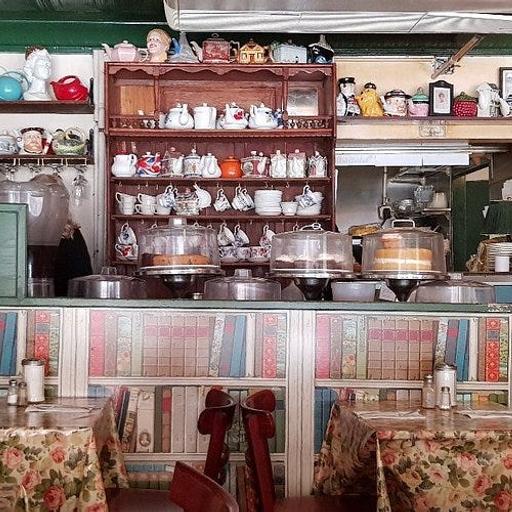
Joanna Coles has spent her formidable career at the center of media: London’s Fleet Street in the ’80s, New York magazine, Marie Claire, Cosmopolitan, and eventually the chief content officer role overseeing Hearst’s entire global magazine portfolio. She knows intimately what legacy media organizations have looked like at every stage of their life cycle and spent years “managing decline” from the inside. Two years ago, as Chief Creative and Content Officer, she helped take over The Daily Beast and bring it to Substack, where it now operates a suite of newsletters and podcasts. She also writes PRIMAL SCREAM with Joanna Coles, her own publication covering politics and power and where she co-hosts and sends out The Daily Beast Podcast to an audience of over 70,000 subscribers. Joanna invited us for a cup of tea and a slice of cake at Tea & Sympathy, a West Village institution that has been importing British calm to Manhattan for over 30 years. There, she and Substack’s head of new media, Hanne Winarsky, talked about the golden age of the glossy mag, the two questions Cosmo readers have never stopped asking, and what life looks like on the other side of the old media order.
Hanne: For somebody growing up today in journalism school who might not know what old newsrooms were like, what was the culture?
Joanna: Well, I mean, first of all, they were incredibly noisy because you had typewriters. And I am not exaggerating when I say that you would get seven pieces of paper, seven pieces of carbon paper. You would put it into the typewriter, and you would have to think very carefully about what you wanted to say, because if you made a mistake, you had to either rip the whole thing out and start all over again or you had to correct it seven times. And you would have what was called Tipp-Ex whiteout, where you had to cross it out. So there was more planning ahead of what you were going to write. It was fantastically noisy. Then computers came in, and half the newsroom, largely men, would say, “Well, I’m not going to use a computer. That’s ridiculous. There’s nothing wrong with a typewriter.” And of course, those people just disappeared out of the newsroom. But it was a very fun, lively culture, and you felt like what you were doing was important, because it was a way of getting information to people. And it was tribal, so people read The Guardian, and that was their tribe. They read the Daily Telegraph or the [London] Times, and that was their tribe. And now of course, we’re inundated with individual voices coming at us, which you don’t really have a sense of their tribe necessarily. Of course, you know, there are lots of newspapers still going, but it’s not quite the journey that was curated for you by the older editors.
Hanne: It was presumably pretty male-dominated at the time, those newsrooms?
Joanna: It was very male-dominated. I worked on Fleet Street when I was working on the Daily Telegraph, the legendary Fleet Street. So you had the high courts at one end, you had St. Paul’s [Cathedral] at the other, and in between you had the big British newspapers. And so at the end of the day, all the journalists would roll out of the various papers and congregate in two or three pubs, the best of which was called El Vino, which is still there. But the crazy thing about it was—and this was in the ’80s—that women weren’t allowed to order or pay for drinks.
Hanne: That’s unbelievable.
Joanna: Isn’t it? Of course, now I look back on it through the lens of, you know, feminism, and think: how outrageous. But

