15 Apr 2026 10:02
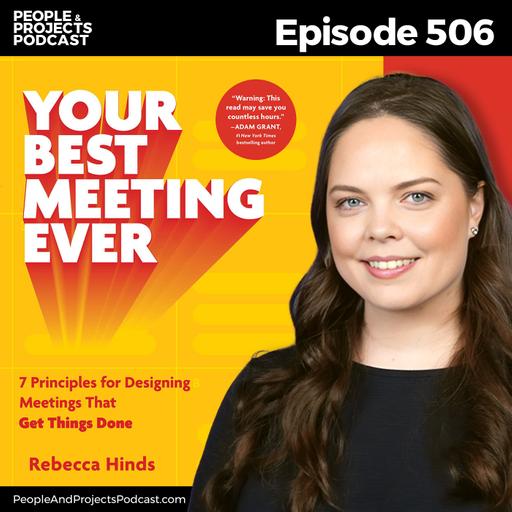
PPP 506 | Stop Optimizing Meetings. Start Reducing Them, with Rebecca Hinds
In this episode, Andy welcomes Rebecca Hinds, organizational behavior researcher and author of Your Best Meeting Ever. Rebecca brings a behavioral science lens to one of the most persistent pain points in modern work: meetings that multiply, linger, and drain rather than deliver.
Andy and Rebecca explore the concept of meeting debt, and why reducing meeting volume often matters far more than optimizing agendas. They discuss why meetings have become status symbols and performance art, how a simple social contract makes it nearly impossible to decline an invite, and what meeting minimalism actually means (hint: it's not about ruthless efficiency). Rebecca shares practical ideas, like calendar cleanses, Return on Time Invested (ROTI) ratings, and unexpected guardrails, including the fascinating case of the 27-minute meeting. They also wrestle with AI's potential to either genuinely improve meeting culture or simply make expensive, inefficient meetings feel more productive.
If you're looking for a research-backed, practical guide to finally taking back your calendar, this episode is for you!
Sound Bites- "Why do we cling to this practice that has largely remained unchanged for decades and decades, and yet we know, we're highly aware that it's highly inefficient and dysfunctional."
- "It's ironic and unfortunate that we now consider so many of these dysfunctional practices, so many of these tactics as business as usual."
- "We tend to associate visibility with value and presence with productivity. A packed calendar is a very clear indication that you are busy, you're important, and you have high status within the organization."
- "Meetings are the most important product in our entire organization, and yet also the least optimized."
- "Meeting debt is so bad that it's not worth it to tinker at the edges and try to optimize the meetings that already exist because fundamentally, many of them should not exist in the first place."
- "Return on Time Invested (ROTI) is a concept I learned from my colleague Elise Keith. It asks people to rate the effectiveness of a meeting on a scale of zero to five based on whether this meeting was well worth it in terms of the time invested."
- "I don't mean efficiency for efficiency's sake, right? The goal isn't to make our meetings ruthlessly efficient at all costs."
- "He was tasked with running these 30-minute meetings. He was seeing them drag on and on rather than make the meeting longer, he made them exactly 27 minutes, and that jolted people out of autopilot."
- "What we're seeing in meetings overwhelmingly is people using AI to cognitively offload the work that they should be doing as humans."
- "I continue to believe there's nothing that communicates your leadership more clearly than being able to run a good meeting, but also being able to steer a bad meeting back on track because people very quickly make the cognitive jump that if you can lead a meeting, if you can lead a meeting back on track, you can probably lead a team, you can probably lead a project, you can maybe lead a function."
- "And the reverse is also true. If you can't lead a good meeting, it doesn't instill a whole lot of confidence in your ability to lead anything bigger."
- 00:00 Introduction
- 01:27 Start of Interview
- 01:36 Rebecca's Background and Journey
- 02:51 The Meeting Sabotage Manual
- 04:38 Meetings as Status Symbols and Performance Art
- 07:30 Meeting Debt: Why Reducing Volume Comes First
- 10:12 Calendar Cleanses: Wiping the Slate Clean
- 11:28 Guardrails Against Meeting Bloat
- 14:30 Better Meeting Metrics: Return on Time Invested
- 17:34 Meeting Minimalism: What It Really Means
- 18:43 Minimalism in Practice
- 21:30 AI and Meeti