1 Jul 2026 07:34
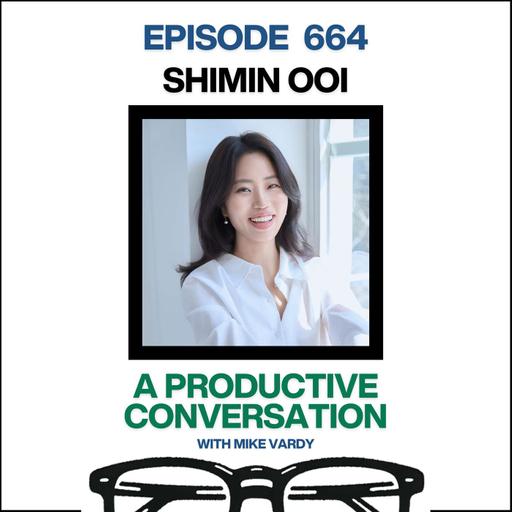
Why You Can't Outwork Bad Sleep (with Shimin Ooi)
This episode is brought to you by Your Clockwise Week—a personalized weekly structure built around your actual life, not an ideal one. If your week feels full but not fitting, you can learn more at mikevardy.com/yourclockwiseweek.
We tend to treat sleep like the thing we'll get to once everything else is handled — the line item we trim first when life speeds back up. But sleep isn't the reward for a productive day. It's the foundation that makes one possible. And one of the more uncomfortable truths about it is that you can't outwork it, out-exercise it, or optimize your way around it.My guest this week is Shimin Ooi, who leads Sleep Reset, a sleep clinic built around CBT-I — the gold-standard approach to insomnia. Shimin's interest in this isn't academic. She spent her childhood with undiagnosed pediatric sleep apnea, sleeping ten hours a night and still exhausted, until her late teens. Fixing it was, in her words, night and day, and that experience shapes how she helps people find genuinely restorative sleep. What surfaced again and again in our conversation is how often the effort to sleep is the very thing keeping us awake.
Six Discussion Points
- Exercise can't stand in for sleep. They do biologically different jobs, and the brain maintenance, tissue repair, immune function, and metabolic regulation that happen while you sleep have no real substitute — a single rough night can knock down immune function dramatically.
- The pressure to sleep well is often what keeps you awake. Telling yourself "I have to sleep tonight" reads to your brain as a threat, raises cortisol, and makes rest harder. Giving yourself permission to sleep badly is paradoxically what lets it come.
- Your bed is teaching your brain a lesson. Every hour spent working or worrying under the covers trains your mind to treat that space as a place for alertness rather than rest, and over time that's how the association breaks.
- Sleep trackers can quietly become the problem. For an anxious sleeper, a "10-hour sleep deficit" reading can trigger the exact spiral that worsens sleep — the data isn't always on your side.
- CBT-I isn't trying to turn an owl into a lark. It addresses insomnia, not your chronotype. Fighting your natural wiring is a different and usually losing battle from fixing a genuine sleep problem.
- Naps are contextual, not categorical. A short, early nap can sharpen a well-rested person, but for someone already struggling at night it drains the sleep pressure they need to fall asleep later.
Three Connection Points
- Sleep Reset — Shimin's sleep clinic and CBT-I program
- Casey Neistat's "Fat and Lazy" — the video I mentioned, where he talks about replacing sleep with exercise (a theory Shimin gently dismantles)
- Dr. Michael Breus on A Productive Conversation — for more on chronotypes and the "wolf" wiring I referenced
If you've ever lain awake running the math on how little sleep you're about to get, this conversation reframes the whole problem. The fix isn't more discipline or a smarter device — it's loosening your grip. Sleep, like so much of what we cover here, responds better to being allowed than to being forced. Give it a listen, and notice where you might be trying too hard at the one thing that asks you to stop trying.
If this episode resonated, I’m exploring ideas like these more deeply in my upcoming book, Productiveness. You can follow along as it takes shape at mikevardy.com/productiveness.