
7 Oct 2026 11:30
0230: Unfinished Tales » Overview & Background
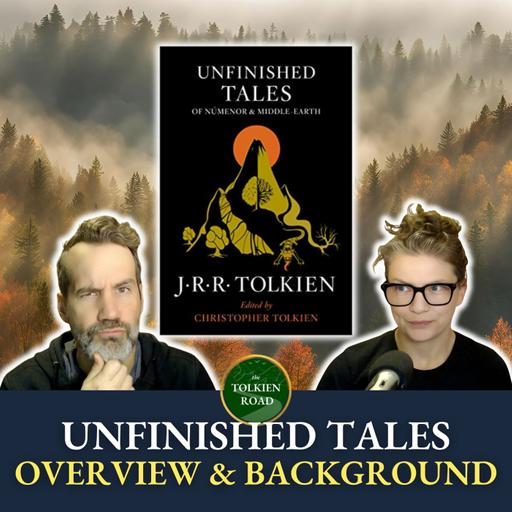
What exactly is Unfinished Tales—and why did Christopher Tolkien choose to publish his father’s unfinished writings at all?In this episode of The Tolkien Road, we begin a new journey into Tolkien’s posthumously published legendarium by exploring the history, purpose, and editorial philosophy behind Unfinished Tales of Númenor and Middle-earth.
- 00:00 — Introduction: Beginning Unfinished Tales
- 06:36 — Tolkien Quote of the Week: Why Fantasy Matters
- 08:52 — What Is Unfinished Tales?
- 10:14 — Why This Book Was So Important
- 11:38 — Christopher Tolkien Takes Up His Father’s Work
- 12:56 — Why Unfinished Tales Is Harder Than The Silmarillion
- 14:31 — Unfinished Tales as a Bridge to The History of Middle-earth
- 16:54 — Christopher Tolkien’s Experience with The Silmarillion
- 20:28 — The Three Choices Christopher Tolkien Faced
- 21:33 — Choosing Textual History Instead of New Stories
- 24:14 — Why Christopher Changed His Editorial Approach
- 27:36 — Why Publish Tolkien’s Unfinished Material?
- 28:23 — Do Tolkien Fans Really Want All the Details?
- 44:59 — Christopher Tolkien’s Lasting Editorial Legacy
- 45:42 — Listener Correspondence
- Unfinished Tales of Númenor and Middle-earth was published in 1980
- It followed The Silmarillion, which Christopher Tolkien published in 1977
- The book gathers incomplete narratives, drafts, notes, and alternate versions of stories from across the legendarium
- Some stories are relatively complete, while others require extensive editorial explanation
- Christopher frequently interrupts the narrative to explain manuscript differences, chronology, textual problems, and editorial choices
- The Silmarillion was shaped into a relatively cohesive narrative
- Christopher combined and edited multiple sources in an attempt to present something close to his father’s intended mythology
- Unfinished Tales takes a very different approach
- Rather than smoothing over inconsistencies, Christopher increasingly shows readers the manuscripts as Tolkien actually left them
- The result is more scholarly, fragmented, and sometimes more difficult—but also much more transparent
- Do nothing and leave his father’s unpublished material alone
- Continue the legendarium, perhaps by completing stories or bringing in other writers
- Present the textual history, allowing readers to see Tolkien’s drafts, revisions, contradictions, and unfinished writings
- Unfinished Tales became a prototype for the later twelve-volume History of Middle-earth
- Instead of continuing Middle-earth himself, Christopher became the curator and interpreter of Tolkien’s manuscripts
- He increasingly preferred to show readers what his father actually wrote rather than construct polished versions of unfinished stories
- Stories already familiar from The Silmarillion, such as Tuor’s journey to Gondolin and the tale of the Children of Húrin, could now appear in fuller or less heavily edited forms
- Readers gained access not only to Tolkien’s stories but also to the process by which those stories developed
- Which manuscripts survive
- How different versions relate to one another
- Where Tolkien changed his ideas
- Which texts are incomplete
- Why contradictions exist
- What editorial decisions were made

