
15 Dec 2025 02:00
111. Why Software Hasn't Eaten Museums (Yet)
Museums today are filled with software, yet they've largely avoided being "eaten" by the tech industry. Unlike music or movies, exhibitions can't be downloaded or scaled infinitely. There's only one Mona Lisa. But if the wrong platform finds the right leverage, that immunity may not last.
Which is why the kind of software museums choose matters. TilBuci is a free, open-source tool used by museums to build touchscreens, kiosks, and projections. It was created by Brazilian software developer Lucas Junqueira after watching too many digital exhibitions quietly break down once the opening buzz faded. Designed to be usable by museum staff long after developers leave, TilBuci treats software not as a product, but as infrastructure.
In this episode, Lucas Junqueira talks about what it takes to build museum software that lasts. Through the story of a projection still running on the facade of the Space of Knowledge museum in Belo Horizonte over a decade after it opened, we explore how open, locally controlled tools extend the life of museum systems, and what's at stake if a tech platform ever inserts itself between museums and their audiences.
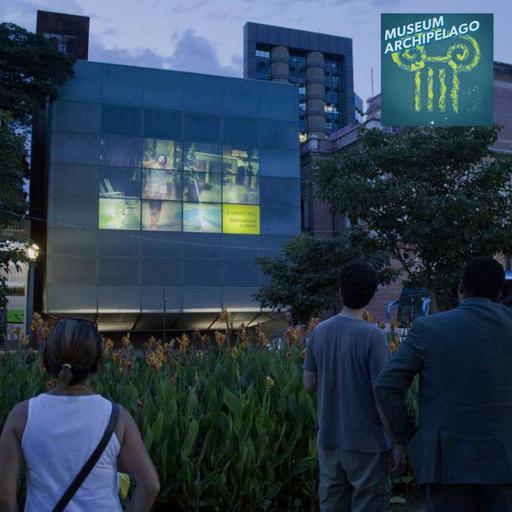
Image: A projection animates the façade of the Espaço do Conhecimento (Space of Knowledge) museum at Praça da Liberdade (Liberty Square) in Belo Horizonte, Brazil. Lucas Junqueira's software Managana, a previous version of TilBuci is running the projection.
Topics and Notes
- 00:00 Intro
- 00:15 The Rise of Software in Museums
- 00:56 Software Eating the World
- 02:19 Why Are Museums Different?
- 03:16 Lucas Junqueira and TilBuci
- 05:09 Challenges and Innovations
- 08:09 The Flash Apocalypse
- 10:12 What's at Stake
- 11:48 Jurassic Park on Club Archipelago
- 13:00 Outro | Join Club Archipelago 🏖
DIVE DEEPER WITH CLUB ARCHIPELAGO 🏖️
Unlock exclusive museum insights and support independent museum media for just $2/month.Start with a 7-day free trial. Cancel anytime.
Your Club Archipelago membership includes:- 🎙️Access to a private podcast that guides you further behind the scenes of museums. Hear interviews, observations, and reviews that don't make it into the main show.
- 🎟️ Archipelago at the Movies, a bonus bad-movie podcast exclusively featuring movies and other pop culture that reflect the museum world back to us.
- ✨A warm feeling knowing you're helping make this show possible.
Transcript
Below is a transcript of Museum Archipelago episode 111. For more information on the people and ideas in the episode, refer to the links above.
View TranscriptWelcome to Museum Archipelago. I'm Ian Elsner. Museum Archipelago guides you through the rocky landscape of museums. Each episode is rarely longer than 15 minutes. So let's get started.
If you've been to a museum lately, any museum big or small, you've probably noticed ever more software-driven experiences. Interactive touchscreens, projections, buttons, videos are all controlled by software.
Lucas Junqueira: I've seen mostly all exhibitions have at least some kind of interaction or some pieces of the exhibition that require some kind of softwar

