
9 Oct 2026 09:00
#415: Achondroplasia Treatment Advances with Dr. Ravi Savarirayan
Please note this episode is only available on our website, DNAToday.com under Episode 415, and access is limited to those in the United States.
In just a few years, achondroplasia treatment has expanded from no approved precision medicines to multiple approaches targeting the condition’s underlying biology.
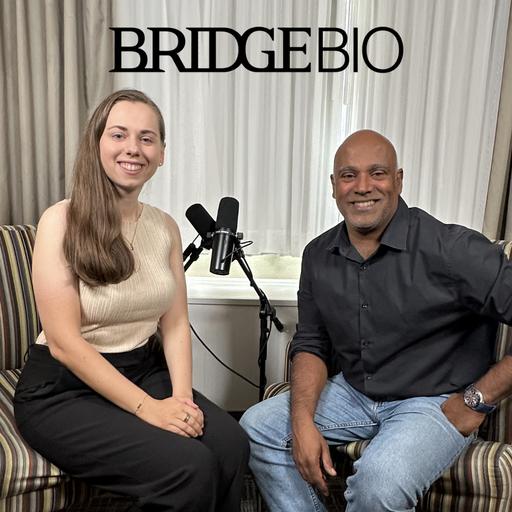
In this episode, we continue our conversation with Dr. Ravi Savarirayan, a global leader in skeletal dysplasia care and a lead investigator across multiple achondroplasia clinical development programs. Dr. Savarirayan previously joined us on Episode 401, where we explored the first approved precision treatment for achondroplasia and international guidance for its use.
This time, we take a broader look at the rapidly evolving achondroplasia treatment landscape, including how different therapeutic approaches target FGFR3 signaling, how researchers interpret clinical trial outcomes, and what results from the Phase 3 PROPEL 3 study of investigational infigratinib could mean for children and families.
We also discuss why treatments cannot be reliably compared using results from separate clinical trials, the importance of studying outcomes beyond growth, and the questions that remain about long-term safety, functional benefits, treatment selection, and switching therapies.
Thank you to BridgeBio for sponsoring this episode.
Episode Discussion Topics- How the achondroplasia treatment landscape has evolved in the last seven years
- How achondroplasia affects more than height
- How current and investigational therapies target FGFR3 signaling in different ways
- What annualized growth velocity, height Z-scores, and body proportionality reveal in clinical trials
- Key findings from the Phase 3 PROPEL 3 study of investigational infigratinib
- What researchers can and cannot yet predict about final adult height based on current data
- Why body proportionality may be an important clinical and functional outcome
- How researchers are evaluating potential effects on mobility, reach, independence, and daily activities
- The long-term safety questions that remain when treatment begins in childhood
- Why results from separate achondroplasia trials should not be compared directly
- How families and healthcare providers can weigh treatment benefits, risks, administration, and personal goals
- What is being studied in hypochondroplasia and other conditions involving overactive FGFR3 signaling
Ravi Savarirayan is consultant clinical geneticist at Victorian Clinical Genetics Services, Professorial fellow at the University of Melbourne, and Group leader (Molecular Therapies at Murdoch Children’s Research Institute, Victoria, Australia. Professor Savarirayan received his MBBS from the University of Adelaide, Australia in 1990 and became a Fellow of the Royal Australasian College of Physicians in 1997. He was certified as a specialist in Clinical Genetics by the Human Genetics Society of Australasia in 1998 and was awarded his Doctor of Medicine from the University of Melbourne in 2004. He was awarded the Fulbright Professional Scholarship for Australia in 1998, and took this up at University of California, Los Angeles (UCLA).
Professor Savarirayan’s primary research focus is on inherited disorders of the skeleton causing short stature, arthritis, and osteoporosis. He has published over 230 peer-reviewed articles

