
16 Oct 2026 09:00
#416 How Baby KJ Became the First Patient Treated With Personalized CRISPR
CRISPR has carried enormous promise since scientists first realized its potential to edit the human genome, but it has also raised some of the biggest ethical questions in modern genetics.
In this episode, Kira Dineen sits down with Dr. Kiran Musunuru to trace the evolution of human gene editing, beginning with the controversial 2018 announcement that scientist He Jiankui had used CRISPR to edit human embryos in China, resulting in the birth of the world’s first gene-edited babies. The experiment, which targeted the CCR5 gene in an attempt to reduce susceptibility to HIV, sparked international condemnation and intensified debate over germline genome editing, where genetic changes could potentially be passed on to future generations.
From there, the conversation shifts to a dramatically different application of CRISPR: treating serious genetic disease in an individual patient.
Dr. Musunuru shares the remarkable story of Baby KJ, who was born with severe carbamoyl phosphate synthetase 1 (CPS1) deficiency and became the first patient to receive a personalized CRISPR-based therapy designed specifically for his genetic variant. The team developed KJ’s customized base-editing treatment in approximately six months, moving from identification of his variant through preclinical testing, manufacturing, regulatory review, and ultimately treatment.
Dr. Musunuru explains how KJ’s therapy works, what researchers have learned from his response so far, and whether his case could establish a new pathway for treating patients with ultra-rare genetic conditions who may never fit into a traditional drug-development model.
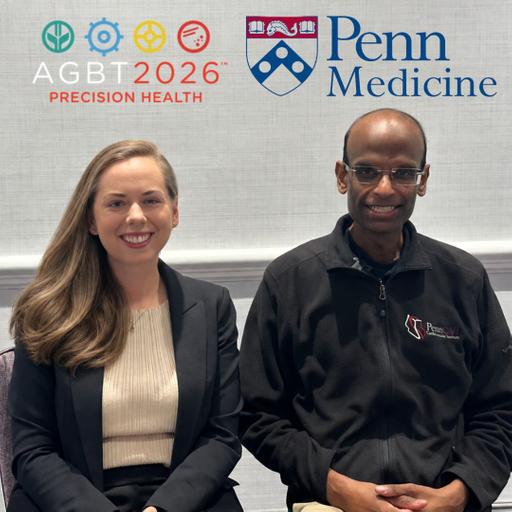
This interview was recorded in person at AGBT Precision Health in Coronado, California, we caught up with Dr. Musunuru after a presentation.
Episode Discussion Topics:- The 2018 announcement of the world’s first CRISPR-edited babies in China
- Why He Jiankui’s experiment targeting the CCR5 gene sparked global scientific and ethical backlash
- The difference between editing embryos and germline cells versus editing somatic cells in a patient
- What the CRISPR babies controversy taught the scientific community about oversight, regulation, and responsible use of gene-editing technology
- How the field of CRISPR medicine has evolved since 2018
- How naturally occurring PCSK9 variants helped reveal a powerful target for lowering LDL cholesterol and preventing cardiovascular disease
- Using CRISPR base editing to permanently turn down PCSK9 activity in the liver as a potential one-time treatment for high cholesterol
- The development of PCSK9 gene-editing therapies for patients with familial hypercholesterolemia and premature coronary artery disease
- The possibility of moving cardiovascular care from lifelong medications to durable, one-time genetic treatments
- How cardiovascular gene editing helped pave the way for applying similar base-editing technology to rare diseases like Baby KJ’s CPS1 deficiency
- What CPS1 deficiency is and why it can become life-threatening shortly after birth
- How Baby KJ’s diagnosis created an opportunity to pursue a personalized gene-editing treatment
- Why KJ’s specific genetic variant was a candidate for base editing
- How base editing differs from traditional CRISPR approaches that make double-stranded breaks in DNA
- Developing a gene-editing therapy specifically for a single patient
- Delivering the gene editor to liver cells using lipid nanoparticles
- Why the liver is an especially promising target for in vivo ge

