
22 Sep 2026 12:00
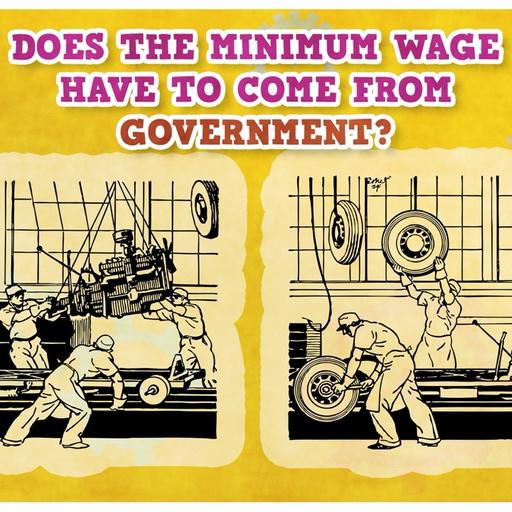
725. What Did Henry Ford Teach Us about Minimum Wages?
What if the free market could raise wages faster and more effectively than any government mandate ever could?
We hear it constantly: the government should raise the minimum wage, or states should set their own higher floors on pay. It's a debate that never really goes away, and there's a real tension in it — forcing companies to pay more can be devastating for smaller businesses, and entry-level jobs are often the first rung on the ladder for people building real skills. So what happens when a business owner raises wages dramatically, entirely on his own, with no law or union forcing his hand?
That's exactly what Henry Ford did in January 1914. Ford already changed the world with the assembly line, making cars affordable for regular families instead of just the wealthy elite. But this episode digs into something else he did that was just as revolutionary: doubling his workers' pay to $5 a day, right in the middle of the rise of labor unions and the first "Red Scare" in America. Brittany walks through why Ford did it, what it cost him, and what happened the very next day outside his factory gates.
This episode is a fascinating real-world case study in incentives, self-interest, and why voluntary action in a free market can accomplish what people often assume only government force can.
What You'll Learn in This Episode- How the federal minimum wage system works, and why individual states can set their own minimum higher
- Why forcing companies to raise wages can hurt smaller businesses and entry-level workers
- How Henry Ford revolutionized the auto industry with the production line
- Why cars were once a luxury only the wealthy could afford, and how Ford's innovations changed that
- The story behind Ford's January 1914 announcement doubling wages to $5 a day
- Why $5 a day was such a massive raise for the era, and how it compared to average pay
- How the rise of labor unions and the first "Red Scare" shaped the backdrop for Ford's decision
- The staggering employee turnover Ford's factories faced before the wage hike, hiring 50,000 workers a year to fill just 14,000 positions
- The hidden costs of high turnover, including training time, lost productivity, and low morale
- Why self-interest and incentives aren't dirty words, and how they're exactly what made Ford's decision work
- What happened the very next day when Ford raised wages, with 10,000 to 15,000 job seekers lining up outside the plant
- The bigger lesson Ford's story teaches about voluntary action versus government-mandated wages
0:00 Why disagreeing with a government mandate isn't the same as disagreeing with the goal 0:31 Today's topic: the ongoing minimum wage debate 1:41 Henry Ford's other big achievements: the production line and affordable cars 2:53 Setting the scene: January 1914 and the $5-a-day announcement 3:21 Why doubling wages was such a massive deal in 1914 3:50 The backdrop: labor unions, socialism, and the first Red Scare 5:11 How people reacted: skepticism and newspaper mockery 5:43 The real problem Ford was solving: massive employee turnover 6:58 The hidden costs of turnover: training, morale, and lost productivity 7:36 Incentives and self-interest: why they aren't a bad thing 8:21 Minimum wage before and after: $2.25 versus $5 a day 8:58 The results: long lines, lower turnover, higher productivity 9:56 The big lesson: voluntary action in the free market 10:41 Wrap-up and final thoughts
👍 Like this video if you love learning how free markets and voluntary choices can outperform government mandates! 🔔 Subscribe for more episodes that break down big ideas in history, economics, and liberty! 💬 Comment below: Do you think more business owners today would raise wages on their own if they weren't forced to? Why or why not?
Shop Resources📘 The Tuttle Twins and the Creature

