
3 Nov 2026 07:20
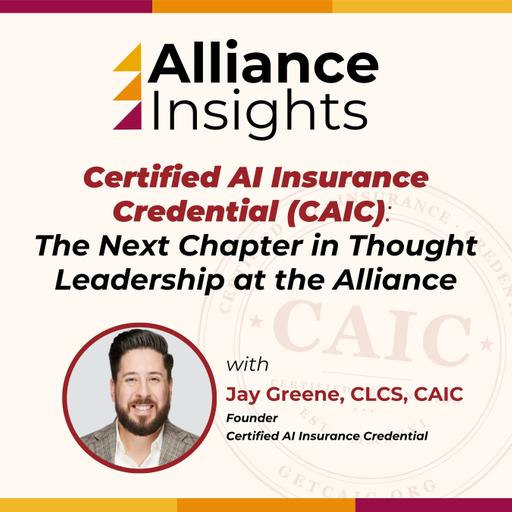
Certified AI Insurance Credential: The Next Chapter in AI Thought Leadership at the Alliance
Topics Discussed
- Why AI is already a business, workforce, and client-service issue
- The founding story behind the Certified AI Insurance Credential
- Moving from general AI awareness to practical implementation
- Why insurance professionals need industry-specific AI education
- Agency automation, missed renewals, and operational pressure
- AI foundations, terminology, and agentic workflows
- Data readiness and organizational AI maturity
- AI governance, safety, and E&O exposure
- Vendor evaluation and workflow redesign
- Building an AI-ready workforce across agencies, MGAs, and wholesalers
- Why adoption and employee confidence determine deployment success
- Using assessments to understand an organization’s starting point
- Why beginner organizations may have advantages over legacy systems
- Keeping AI curriculum current as technology changes
- Using automation to create more time for client relationships
Key Takeaways
- AI is no longer a future issue for insurance organizations; it is already affecting operations, workforce development, and client service.
- Insurance professionals need a baseline understanding of AI before they can evaluate tools, redesign workflows, or manage risk.
- The CAIC was developed as an insurance-specific credential rather than generic technology education.
- A successful AI strategy must address data, workflows, governance, safety, vendor evaluation, and E&O exposure.
- Organizations need practitioners or internal champions who can guide AI deployment and automation.
- Employees do not need to become programmers, but they do need new knowledge, practice, and confidence.
- Technology deployment without organizational adoption does not create meaningful value.
- Assessing AI readiness helps organizations understand their current position and plan an appropriate path forward.
- AI education must be continually updated because the technology and its applications change rapidly.
- Automation should handle repetitive work so insurance professionals can spend more time building human relationships.
Focusing exclusively on risk management and insurance professional development, the Risk & Insurance Education Alliance provides a practical advantage at every career stage, positioning our participants and their clients for confidence and success.

