2 Jul 2026 03:00
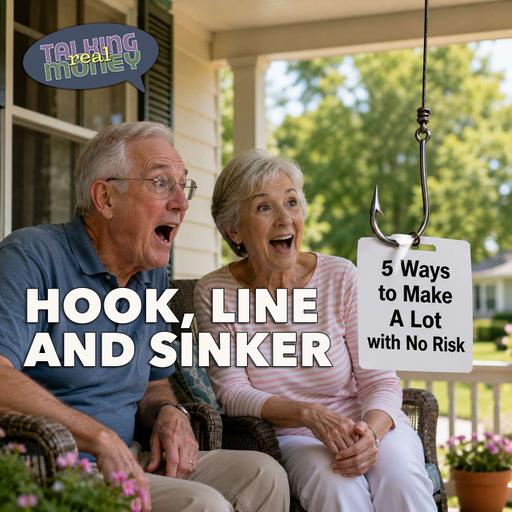
Clickbait Investing
Don and Tom take apart a clickbait Kiplinger piece touting the “five top buy-and-hold investments to manage market volatility,” arguing that the list is a random grab-bag of recent winners rather than a coherent portfolio. They explain why the suggested mix—VOO, VXUS, a healthcare sector ETF, Apple stock, and gold—does little to reduce volatility and instead layers on concentration risk, sector bets, and performance chasing. From there, they broaden the discussion into a more useful question: where should investors actually go for trustworthy information, how should listeners think about evaluating a financial advisor, and what really matters when judging portfolio design. The back half of the episode features a thoughtful call about investing a spendthrift trust for two sons over a 12-year horizon, plus a warning that advisor performance can’t be measured by returns alone without understanding risk, asset allocation, and the planning services being delivered.0:05 Cold open, podcast intros, and Tom’s ever-growing aircraft museum1:40 Don tees up a Kiplinger clickbait article on the “five top buy-and-hold investments” for market volatility2:14 Why the article’s opening about political uncertainty and inflation could apply to almost any year3:36 The one part they agree with: long-term wealth is built by disciplined exposure to quality assets, not reacting to headlines4:53 The rise of numbered clickbait headlines and whether numbers in titles actually matter5:53 Why “stability” and “stock picks” don’t belong in the same sentence6:27 Kiplinger pick #1: VOO — fine as a broad U.S. stock fund, but hardly a volatility solution7:06 Kiplinger pick #2: VXUS — the one recommendation they think mostly holds up8:21 Kiplinger pick #3: XLV healthcare ETF — a sector bet masquerading as a defensive holding9:33 Why a healthcare sector fund lags a total-world approach while adding unnecessary concentration10:28 Kiplinger pick #4: Apple stock — and why adding a single stock you already own inside the S&P 500 makes little sense10:59 The problem with betting on one company instead of owning the economy through broad diversification12:20 Kiplinger pick #5: gold — and why recent gains don’t make it a volatility manager12:48 Gold’s long-term history, lack of fundamentals, and why its recent performance actually illustrates volatility rather than reducing it14:12 The bigger issue: how do you decide which financial publications or sources are worth trusting?15:26 Why Vanguard and Dimensional research tend to be more reliable than headline-driven finance content16:35 The real reason people click these articles: fear, underperformance anxiety, and the urge to “improve” a portfolio17:23 Why the Kiplinger portfolio is missing the one thing you’d expect in a true volatility-management portfolio: bonds18:51 Don and Tom’s plea to listeners: follow evidence-based advice rather than clickbait lists19:30 Listener call from Brian in Bremerton about investing spendthrift trusts for his sons over a 12-year horizon20:55 The challenge: balancing growth with the possibility of distributions for education, cars, weddings, or a house23:08 Don’s suggested framework: keep a cash/fixed-income reserve for near-term needs and invest the rest aggressively for growth24:48 Why a target-date fund may not be the best fit for this kind of trust structure25:37 A practical allocation idea: roughly 80/20 with a global equity fund plus a broad bond fund26:51 Brian explains that Roth IRA funding is already part of the family’s gifting and estate strategy27:32 A listener from Seoul praises the show and begs them not to turn into a “humblebrag retirement call-in show”29:49 Listener question: how do you measure whether your financial advisor is performing