26 Apr 2026 03:56
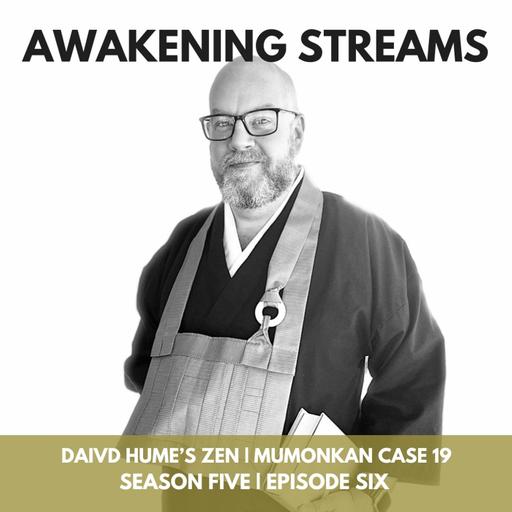
David Hume’s Zen: Escaping the "Faint Copies" of Reality | Mumonkan Case 19
Series: Awakening Streams
Teacher: Sensei Michael Brunner (Sōen)
Location: One River Zen | Ottawa, Illinois
Title: Escaping the "Faint Copies" of Reality | Mumonkan Case 19
Episode Summary
Are we living in the vivid, forceful reality of the present, or are we stuck in the "faint copies" of our own minds? In this episode, Sensei Michael Brunner explores the intersection of 18th-century Western Enlightenment philosophy and 13th-century Japanese Zen.
Drawing on the radical empiricism of David Hume, Sensei Brunner identifies a "glitch" in the human operating system: our habit of prioritizing conceptual shorthand (ideas) over direct, raw experience (impressions). By weaving Hume’s skepticism with the Four Reliances and the classic Mumonkan Case 19, this teisho offers a diagnostic tool for the "shadowboxing" of the discursive mind and an invitation to return to the Ordinary Mind.
Key Highlights
The "Glitch" in the Operating System: How David Hume’s distinction between impressions (vivid reality) and ideas (faint memories) mirrors the Zen struggle on the cushion.
The Four Reliances: A calibration of the spiritual compass. Why we must rely on meaning over words and the definitive over the provisional.
Shadowboxing with the Mind: Understanding why trying to "think" our way to enlightenment is like a dog running in its sleep—busy, but ultimately going nowhere.
Ordinary Mind is the Way: A deep dive into Mumonkan Case 19. Why Nansen tells Joshu that "knowing is delusion" and how "not-knowing" leads to intimacy with reality.
The Scaffold vs. The Reality: Moving beyond the "Buddhistic notions" and dusty tomes to find the blooming, eternal spring of direct experience.
Featured Quote
"We listen to the inner critic and miss the vivid, forceful reality that is always present right here and right now. We turn practice into a laboratory of faint copies, compressing raw experience into stale narratives: good sit, bad sit, good practitioner, bad practitioner. Hume warns us that these are just shadows."
Scriptural & Philosophical References
David Hume: A Treatise of Human Nature (Impressions vs. Ideas)
The Four Reliances: (Catuḥpratisaraṇa)
The Mumonkan (The Gateless Barrier): Case 19, "Ordinary Mind is the Way"
Dōgen Zenji: Contemporary studies of the Shōbōgenzō
About One River Zen
One River Zen is a center for rigorous Dharma study and direct realization located in Ottawa, Illinois. Under the guidance of Sensei Michael Brunner, the Sangha bridges ancient Soto Zen lineage with contemporary intellectual inquiry. Our mission is to provide a "scaffold" for practitioners to reach the direct reality of Buddha-nature in the modern world.
Connect with us:
Website: oneriverzen.org
Join the Sangha: Weekly sittings, study groups, and sesshins.
Support the Podcast: oneriverzen.org/donate
Keywords: Zen Philosophy, David Hume, Mumonkan Case 19, Ordinary Mind, Michael Brunner, One River Zen, Soto Zen, Mindfulness, Radical Empiricism, Ottawa Illinois Zen
🪷 Awakening Streams: The One River Zen PodcastTeachings and reflections with Sensei Michael Brun