30 Dec 2024 03:06
When the proof comes as white light and angels
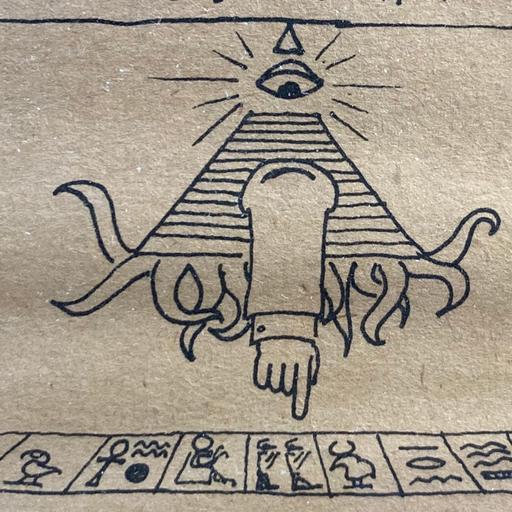
The felt experience of mathematics — witchcraft and black magic — “Shut up, kid!” — what is a real number? — shocked and embarrassed — clouds all the way down — a choir of angels singing — painting Cthulhu’s third eye on the walls of our mathematics and science departments
Video from a monthly live Ask-Me-Anything!
The transcript is below. The web page adds fun illustrations, and a wonderful comic strip, as mentioned in the video!
But first, how to join us next time:
It will be Sunday, January 26th, 9 a.m. Pacific Time. To participate, you need to subscribe (free or contributing), if you haven’t already.
It helps me a lot if you pose questions ahead of time, so I can prepare a bit! You could post them as a comment here, or you can put them in the chat thread.
Transcript
The book Mathematica, by David Bessis
Big series of questions from Tobin Davis-Jones in the web chat, which I found fascinating because it connects with something that’s personally very important for me. His questions are, and observations concern, or are sparked by, a book called Mathematica by David Bessis.
He began by asking if I’ve read that. I haven’t. A number of people have recommended it to me, and said “this is going to be relevant for you.” I read a bunch of reviews and boy, it sure is relevant for me! I gave a copy to my spouse Charlie Awbery for their birthday, which was a couple weeks ago, and they’ve been reading it and raving about it. So I’m planning to borrow it when they’re done.
Envisioning: the felt experience of mathematics
Tobin says, “Students of rationality often complain that the symbols on the page of rationality are impossibly dull and intimidating. Bessis says that that’s because we neglect to explain that there’s an associated living internal experience of imagination and intuition that is required to really understand and apply formal methods.”
Yes! Part Three of my meta-rationality book is supposed to go into this in a lot of detail. If you go to the metarationality.com site and find Part Three, which is called “Wielding the power of meaninglessness: Taking rationality seriously,” that has a sketch, currently only, of what I’m going to be saying about this.
For lack of a better word, I call this process of “imagination and intuition,” I call it “envisioning,” because it is similar to mental imagery, but it’s not the same. It has a kinesthetic component. There’s a wonderful piece by Terry Tao, who’s one of the greatest living mathematicians, about how when he was trying to understand a particular difficult piece of mathematics, he was rolling around on the floor, his whole body, feeling the effect of some mathematical function.
There’s a great quote from Einstein about this, where he says, um, it’s partly sort of visual, but it’s partly… propriostatic, proprio… that word! So you’re actually grabbing the mathematical objects, and you’re doing things with them.
Like most of my posts, this one is free. I do paywall some as a reminder that I deeply appreciate paying subscribers—some new each week—for your encouragement and support. It’s chang