22 May 2026 09:00
#395 Mapping Melanoma: How Spatial Biology Is Advancing Cancer Research
What if we could study melanoma not just cell by cell, but in the exact place those cells live inside the tumor?
That is the promise of spatial biology. In this episode of DNA Today, we explore how emerging genomic technologies are transforming melanoma research by allowing scientists to examine not only which cells are present in a tumor, but where they are located, how they interact, and why those relationships matter.
May is Melanoma Awareness Month, making this an important time to spotlight how tools like spatial transcriptomics, single-cell sequencing, and multiomics approaches are helping researchers better understand tumor behavior, immune response, and treatment resistance.
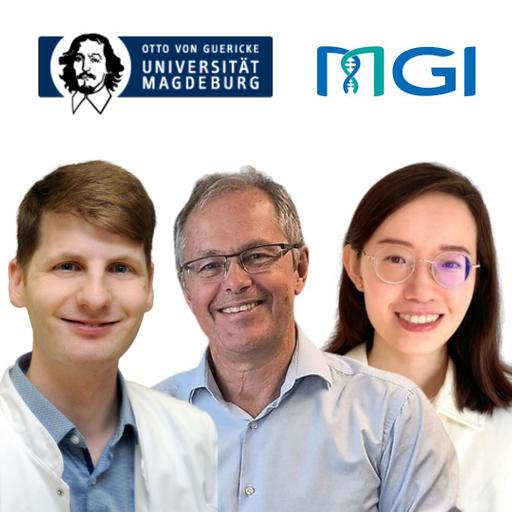
Joining us are Professors Thomas Tüting and Andreas Braun, German dermatologists and researchers whose work focuses on melanoma, tumor immunology, and translational cancer research. We are also joined by Dr. Jia Hui Khoo, Product Manager at MGI, who brings expertise in spatial biology and the technologies helping make this research possible.
Together, we discuss an exciting melanoma research project profiling human melanoma samples from the University Hospital Magdeburg’s biobank, using MGI’s DCSP approach, which spans DNA, cell omics, spatial omics, and proteomics. This work has the potential to deepen our understanding of melanoma biology, tumor heterogeneity, immune landscapes, and the future of precision oncology.
In this Episode, We Discuss:- How melanoma research and treatment have evolved, especially with the rise of immunology and immunotherapy.
- Why human melanoma biobanks are so valuable for translational cancer research.
- How spatial biology helps researchers understand tumors in context, not just as isolated cells.
- Why the location of cells within a tumor matters for understanding melanoma progression and immune response.
- How spatial transcriptomics and single-cell sequencing can reveal differences between patients who respond well to immunotherapy and those who do not.
- What researchers hope to learn by profiling STOmics spatial transcriptomics datasets alongside matched single-cell datasets from human melanoma and mouse models.
- How MGI’s DNBSEQ and STOmics technologies support oncology research.
- What MGI’s DCSP approach brings to melanoma research by integrating DNA, cell omics, spatial omics, and proteomics.
- Why high-resolution spatial technologies like Stereo-seq may be especially important for studying the tumor microenvironment.
- How multiomics research could eventually inform biomarker discovery, patient stratification, therapeutic development, and the future of human pathology.
Professor Thomas Tüting, MD is Professor and Chairman of Dermatology at University Hospital Magdeburg in Germany, where his work focuses on tumor immunology, melanoma progression, metastasis, and resistance to cancer immunotherapy. He trained in dermatology at University Hospital Mainz and completed research training in experimental tumor immunology at the University of Pittsburgh. His research has explored how the immune system shapes melanoma biology, including the role of inflammation, tumor plasticity, and the tumor microenvironment in cancer progression and treatment response. In 2024, Professor Tüting was awarded an ERC Synergy Grant with collaborators at Uppsala University to advance immunotherapy research for malignant melanoma and brain tumors, with a focus on the vascular-immune interface and local anti-tumor immune activation.
Professor Andreas D. Braun, MD is a dermatologist and researcher in the Department of Dermatology, Allergology and Venereology at the University Hospit