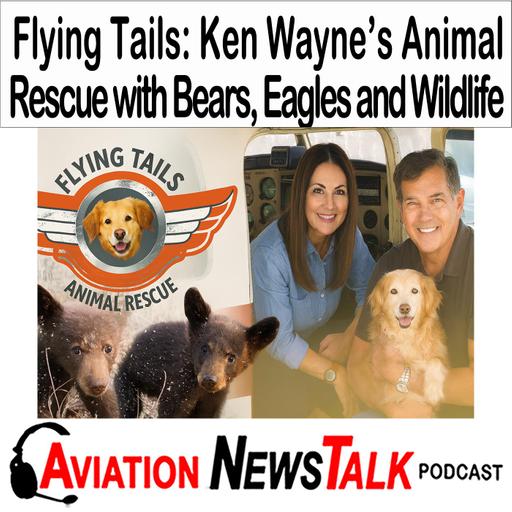
406 Flying Tails: Ken Wayne's Amazing Animal Rescue Flights with Bears, Eagles & Wildlife
Max talks with former KTVU 2 and KRON 4 anchor Ken Wayne, founder of Flying Tails, about his extraordinary animal rescue flights involving bear cubs, bald eagles, coyotes, and dozens of shelter animals across California. Drawing on his past experience as a Navy journalist, Ken describes the path that led him from military broadcasting to a major-market news career—and ultimately to a mission that blends aviation with wildlife rescue.
Ken's journey began at the Navy's Defense Information School, where he learned print reporting, photography, radio, and TV production. His service assignments took him from the Aleutian Islands to the Mediterranean aboard the USS Biddle, and finally to Subic Bay in the Philippines, where he hosted a radio show and shot television stories for the Far East Network. He also frequently traveled by helicopter and even completed a carrier landing in a COD aboard USS Midway, building a deep appreciation for aviation.
Years later, after buying a Cessna 182 and flying with friends, Ken discovered animal rescue missions through Pilots N Paws. His breakthrough came when he responded to a call seeking transport for two bear cubs from South Lake Tahoe to Ramona. That flight—completed the day before a long-planned trip to Paris—set the tone for what Flying Tails would become. The TV story went viral, helped earn him an award from the U.S. Humane Society, and brought new awareness to the potential of using GA aircraft for wildlife operations.
Since then, Flying Tails has become California Fish & Wildlife's go-to aviation nonprofit. Ken describes rescuing seven bear cubs in one summer, including a tiny Ventura County cub that had to be bottle-fed by caregivers wearing bear suits to prevent human imprinting. That cub later lived in a world-class bear enclosure in Sonoma County before returning to the wild near Ojai. Another cub, found hairless in the El Dorado National Forest, was flown to the Sequoia Park Zoo after it was deemed unfit for winter survival.
Flying Tails also rescues countless cats and dogs from overwhelmed Central Valley shelters. Ken recounts missions involving 21 animals at once—14 puppies found in a garbage bag, kittens injured in a tent fire, and dozens of animals who were mere hours away from being euthanized due to lack of space. He explains why animals move northward in California, where adoption demand is higher and shelter capacity more manageable.
The organization's wildlife work includes transporting owls, hawks, raptors, and a bald eagle Ken released at Lake Almanor—a moment he describes as one of the most exhilarating of his life. Wildlife crates are lined with burlap to prevent feather damage, and after each flight, aircraft are disinfected to prevent disease transmission. Gloves, tie-downs, and careful weight-and-balance planning are essential parts of every mission.
Emotionally, Ken says what keeps him going is watching animals shed their fear during flight. Many board the airplane scared, panting, or stressed from heat, only to fall asleep within 20–30 minutes at altitude. When the airplane lands in cooler Bay Area air, the animals appear visibly relieved. That shift—from fear to calm—is what Ken believes makes these missions so rewarding for pilots.