
21 Oct 2026 11:00
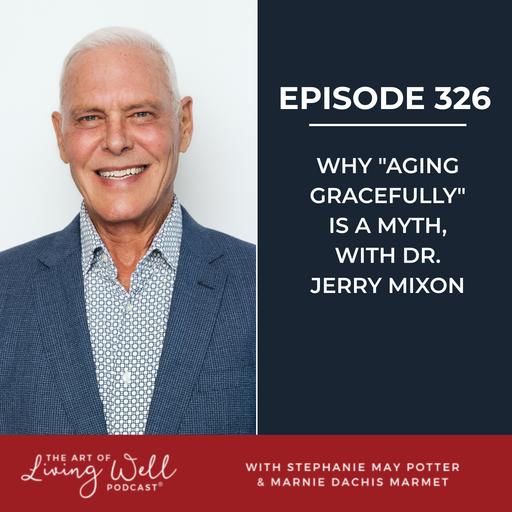
E326: Why "Aging Gracefully" Is a Myth, with Dr. Jerry Mixon
What if the way we've been taught to think about aging is completely backwards? What if feeling exhausted, gaining weight, losing muscle, and struggling with brain fog isn't actually inevitable? In this episode of The Art of Living Well Podcast®, Marnie and Stephanie sit down with physician Dr. Jerry Mixon, who has spent the last 30 years focused on longevity medicine after realizing, at 50, that treating disease after it appears wasn't enough.
Dr. Mixon shares his own turning point (including the office chair moment that finally got his attention), then walks through why testosterone, not estrogen, is actually a woman's primary hormone, why "normal" lab results don't always mean optimal, and why muscle functions almost like its own gland in the body. They also get into the real risks of losing muscle on GLP-1 medications, why BMI is a flawed metric for midlife women, and what walking pace can tell you about long-term health.
This is a deep, detail-rich conversation, so if you've ever been told your labs are "normal" but still felt off, or you're curious about hormone therapy, muscle loss, or where to start with limited time and budget, this episode is for you.
Key Takeaways:
-
Testosterone, not estrogen, is a woman's primary sex hormone by volume, and it declines sharply through midlife
-
Muscle functions almost like an active gland, releasing proteins that influence immune function, brain health, and metabolism
-
"Normal" lab results are often built around average reference ranges, not what's optimal for how you actually want to feel
-
BMI doesn't distinguish muscle from fat, which makes it a poor metric for midlife women focused on body composition
-
Walking pace is one of the simplest, most telling indicators of long-term physical function
-
GLP-1 medications can come with meaningful muscle loss if protein intake and resistance training aren't part of the plan
-
How a hormone is delivered (oral pill vs. topical cream) can matter as much as which hormone is used
-
Regular lab testing against your own personal baseline, not just population averages, gives a clearer picture of what's actually changing
Episode Breakdown with Timestamps: 00:00 Welcome and Guest Introduction: Dr. Jerry Mixon 00:46 From Overweight Doctor to Longevity Physician: Dr. Mixon's Turning Point 01:48 The Story That Changed Everything: Stuck to His Own Office Chair 02:46 Why Longevity Medicine Was Once Only for the Ultra-Wealthy 04:44 30 Years Later: Life at (Nearly) 80 06:09 Testosterone: The Hormone Women Are Often Missing 07:26 Why Lab Reports Compare Estrogen and Testosterone in a Misleading Way 08:49 What Testosterone Actually Does for a Woman's Body 10:03 Addressing the "Will Testosterone Make Me Look More Masculine?" Question 11:52 Why So Many Midlife Women Are on an Antidepressant or Anti-Anxiety Medication 12:31 Do Testosterone-Boosting Supplements Actually Work? 13:04 Inside the Clinic: Custom Compounded Hormone Creams 14:36 Why Regular Lab Testing Against Your Own Baseline Matters 15:30 Dr. Mixon's Four Rules of Medicine 18:26 How Long It Takes Women (vs. Men) to Start Feeling Better 20:27 Why Muscle Is One of the Most Important Organs for Longevity 22:14 The Exercise and Cancer Survival Connection 23:25 Fat Tissue, Senescent Cells, and Why They Matter

