
3 Sep 2026 03:04
Forgive Me, for We Have Sinned
On Yom Kippur, we lovingly honor our parents' memories during Yizkor—so why does the climax of the confession force us to stand up and blame them for our sins?
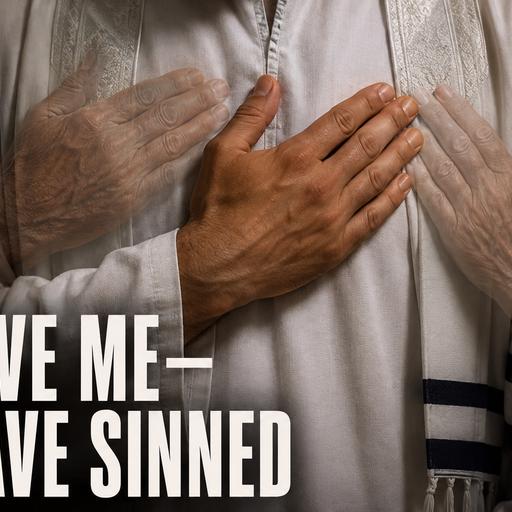
On Yom Kippur, we strike our own chests—but confess the sins of people who are no longer alive.
אֲבָל אֲנַחְנוּ וַאֲבוֹתֵינוּ חָטָאנוּ
"But we and our parents have sinned."
Why bring our mothers and fathers into our confession? Are we blaming them, asking forgiveness on their behalf—or admitting that their unfinished business lives on in us?
In this episode of Madlik Disruptive Torah, Geoffrey Stern and Rabbi Adam Mintz explore one of the most provocative lines in the Selichot and Yom Kippur liturgy. Far from being a passing phrase, it is a climax of the confession: when the prayer leader reaches "But we have sinned," everyone must stand—bowed and without leaning for support.
The wording itself is disputed. Some traditions say simply, "But we have sinned." Others insist upon, "But we and our fathers have sinned." The Sephardic liturgy widens the circle further: "We, our fathers, and the members of our household."
And the question becomes even sharper when we compare confession with Yizkor. On Yom Kippur, we lovingly recall the virtues of our parents during Yizkor—but repeatedly include their sins in our confession. Is that a violation of honoring our parents, or a more profound form of connection—one that embraces their humanity as well as their virtues?
This week's Parsha, Nitzavim-Vayeilech, provides the grammar for this intergenerational "we." Moses gathers the entire people into the covenant: leaders and laborers, parents and children, "those who are standing here with us today and those who are not here with us today." The covenant reaches forward to unborn generations; confession reaches backward to those who came before us. Past, present, and future stand together in one moment.
The idea is deeply biblical:
- "We have sinned with our ancestors" — Psalms
- "Our sins and the iniquities of our fathers" — Daniel
- "We and our ancestors have sinned" — Jeremiah
- "Our ancestors sinned and are no more, and we bear their iniquities" — Lamentations
- "They shall confess their iniquity and the iniquity of their ancestors" — Leviticus
Judaism rejects original sin, so what exactly do we inherit?
The Or HaChaim suggests that we inherit not only behavior but its rationalizations. When earlier generations appeared to prosper despite their choices, their success became evidence that those choices were acceptable. True repentance therefore requires reassessing an entire historical trajectory—not simply regretting an isolated personal act.
The Chatam Sofer turns inherited memory into heightened responsibility. Our ancestors experienced history without knowing its outcome; we stand on their shoulders and can see the pattern. If we fail to learn from their experience, perhaps we should know better.
Rav Shagar focuses on the word "we." What allows one person to confess with others? His answer is trust: the recognition that another person, in freedom and sincerity, shares my faith, my searching, and my struggle. He compares collective prayer to communal singing. The result is not merely many voices sounding simultaneously, but distinct voices merging into something no individual can create alone.
Finally, the Bat Ayin reads avoteinu—"our fathers"—as an allusion to the alef-bet, the building blocks of language. The alphabetic confession repairs our damaged letters; and because language shapes thought, it may also repair the way we think.
Perhaps saying "we and our parents have sinned" is not about condemning the past. It is about recognizing the inherited patterns, assumptions, wounds, and possibilities that continue to live within us—and finding the solidarity to repair them together.
So here's our question: When you say, "But we—all of us, including our mothers and fathers—have sinned," do you think about your parents d

