12 Oct 2025 10:30
Podcast #213: Arapahoe Basin President & COO Alan Henceroth
Who
Alan Henceroth, President and Chief Operating Officer of Arapahoe Basin, Colorado – Al runs the best ski area-specific executive blog in America – check it out:
Recorded on
May 19, 2025
About Arapahoe Basin
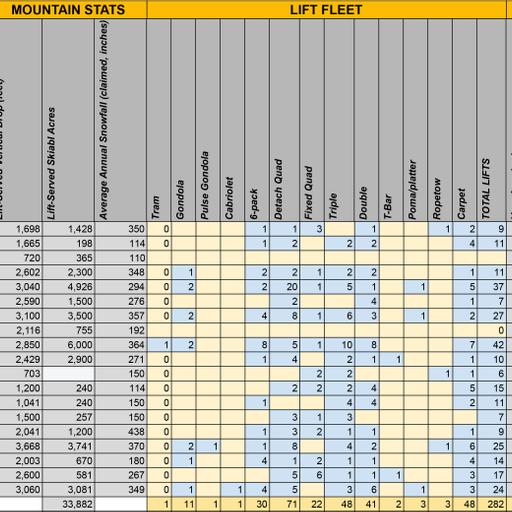
Click here for a mountain stats overview
Owned by: Alterra Mountain Company, which also owns:
Pass access
* Ikon Pass: unlimited
* Ikon Base Pass: unlimited access from opening day to Friday, Dec. 19, then five total days with no blackouts from Dec. 20 until closing day 2026
Base elevation
* 10,520 feet at bottom of Steep Gullies
* 10,780 feet at main base
Summit elevation
* 13,204 feet at top of Lenawee Mountain on East Wall
* 12,478 feet at top of Lazy J Tow (connector between Lenawee Express six-pack and Zuma quad)
Vertical drop
* 1,695 feet lift-served – top of Lazy J Tow to main base
* 1,955 feet lift-served, with hike back up to lifts – top of Lazy J Tow to bottom of Steep Gullies
* 2,424 feet hike-to – top of Lenawee Mountain to Main Base
Skiable Acres: 1,428
Average annual snowfall:
* Claimed: 350 inches
* Bestsnow.net: 308 inches
Trail count: 147 – approximate terrain breakdown: 24% double-black, 49% black, 20% intermediate, 7% beginner
Lift count: 9 (1 six-pack, 1 high-speed quad, 3 fixed-grip quads, 1 double, 2 carpets, 1 ropetow)
Why I interviewed him
We can generally splice U.S. ski centers into two categories: ski resort and ski area. I’ll often use these terms interchangeably to avoid repetition, but they describe two very different things. The main distinction: ski areas rise directly from parking lots edged by a handful of bunched utilitarian structures, while ski resorts push parking lots into the next zipcode to accommodate slopeside lodging and commerce.
There are a lot more ski areas than ski resorts, and a handful of the latter present like the former, with accommodations slightly off-hill (Sun Valley) or anchored in a near-enough town (Bachelor). But mostly the distinction is clear, with the defining question being this: is this a mountain that people will travel around the world to ski, or one they won’t travel more than an hour to ski?
Arapahoe Basin occupies a strange middle. Nothing in the mountain’s statistical profile suggests that it should be anything other than a Summit County locals hang. It is the 16th-largest ski area in Colorado by skiable acres, the 18th-tallest by lift-served vertical drop, and the eighth-snowiest by average annual snowfall. The mountain runs just six chairlifts and only two detachables. Beginner terrain is limited. A-Basin has no base area lodging, and in fact not much of a base area at all. Altitude, already an issue for the Colorado ski tourist, is amplified here, where the lifts spin from nearly 11,000 feet. A-Basin should, like Bridger Bowl in Montana (upstream from Big Sky) or Red River in New Mexico (across the mountain from Taos) or Sunlight in Colorado (parked between Aspen and I-70), be mostly unknown beside its heralded big-name neighbors (Keystone, Breck, Copper).
And it sort of is, but also sort of isn’t. Like tiny (826-acre) Aspen Mountain, A-Basin transcends its statistical profile. Skiers know it, seek it, travel for it, cross it off their lists like a snowy Eiffel Tower. Unlike Aspen, A-Basin has no posse of support mountains, no grided downtown spilling off the lifts, no Kleenex-level brand that stands in for skiing among non-skiers. And yet Vail tried buying the bump in 1997, and Alterra finally did in 2024. Meanwhile, nearby Loveland, bigger, taller, snowier, hi