9 Jul 2026 04:33
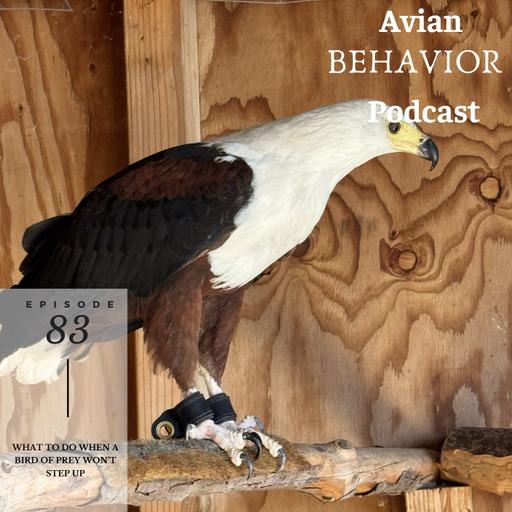
What to Do When a Bird of Prey Won't Step Up
What should you do when a bird of prey avoids the trainer, flushes during an approach, or will not step onto the glove? Where do you even start with a bird of prey?
Before focusing on the step-up, take a closer look at the environment. Housing, perch placement, privacy, approach paths, and opportunities to move away can all affect whether a bird is able to learn and participate.
In this lesson, I use the early training of an African Fish Eagle to explore:
• How to assess a bird's environment, temperament, and learning history • Why immobility is not always calm behavior • How inappropriate housing can increase avoidance • How space can function as a reinforcer • Why trainers should build movement and husbandry skills before prioritizing the step-up • How a broader behavioral repertoire gives a bird more ways to succeed
Although this lesson features an African Fish Eagle, these principles apply broadly to hawks, falcons, eagles, owls, vultures, and other ambassador birds that are difficult to approach or reluctant to engage. We rely on principles based on the constructional approach and using space as a reinforcer, starting off by rating birds on an avoidance scale from 1-5 that helps us formulate a starting point.
This podcast episode is adapted from Building Confidence with Birds of Prey, a course in the Avian Behavior Lab.
Download our free Environmental Learning-Support Workbook here
This video is adapted from Building Confidence with Birds of Prey, a course in the Avian Behavior Lab. You can get your free 14 day trial with the code AVIAN