
24 Feb 2025 04:15
109. The Rise and Fall of Enterprise Square, USA
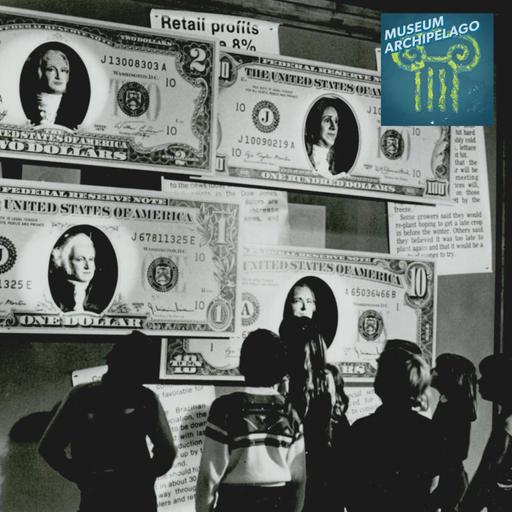
For the last few decades of the 20th century, if you visited Oklahoma City, Oklahoma, you could have been serenaded by a barbershop quartet of audio-animatronic portraits of America's founders as framed on U.S. currency. This was one of the many exhibits at Enterprise Square, USA, a high-tech museum dedicated to teaching children about Free Market Economics. The museum, which found itself out of money almost before it opened, shut down in 1999.
Barrett Huddleston first encountered these exhibits as a wide-eyed elementary school student in the 1980s, mesmerized by the talking puppets, giant electronic heads, and interactive displays that taught how regulation stifled freedom. Years later, he returned as a tour guide during the museum's final days, maintaining those same animatronics with duct tape and wire cutters, and occasionally being squeezed inside the two-dollar bill to repair Thomas Jefferson.
He joins us to explore this collision of education, ideology, and visitor experience, and how the former museum shapes his own approach to teaching children today.
Cover Image: Children watch audio-animatronic portraits of America's founders, as framed on U.S. currency, sing a song about freedom. [Photograph 2012.201.B0957.0912] hosted by The Gateway to Oklahoma History
Topics and Notes
- 00:00 Intro
- 00:15 Buzludzha Again
- 00:46 Enterprise Square, USA
- 01:32 Barrett Huddleston
- 02:05 The Origins and Purpose of Enterprise Square
- 03:09 The Boom and Bust of Oklahoma's Economy
- 05:47 The Disney Connection and Animatronics
- 07:54 The Decline of Enterprise Square
- 11:42 Huddleston's Reflections on Education
- 13:41 Outro | Join Club Archipelago 🏖
DIVE DEEPER WITH CLUB ARCHIPELAGO 🏖️
Unlock exclusive museum insights and support independent museum media for just $2/month.Start with a 7-day free trial. Cancel anytime.
Your Club Archipelago membership includes:- 🎙️Access to a private podcast that guides you further behind the scenes of museums. Hear interviews, observations, and reviews that don't make it into the main show.
- 🎟️ Archipelago at the Movies, a bonus bad-movie podcast exclusively featuring movies and other pop culture that reflect the museum world back to us.
- ✨A warm feeling knowing you're helping make this show possible.
Transcript
Below is a transcript of Museum Archipelago episode 109. For more information on the people and ideas in the episode, refer to the links above.
View TranscriptWelcome to Museum Archipelago. I'm Ian Elsner. Museum archipelago guides you through the rocky landscape of museums. Each episode is rarely longer than 15 minutes. So let's get started.
Buzludzha comes up a lot on Museum Archipelago. The monument was built in 1981 to look like a futuristic flying saucer parched high on Bulgarian mountains. Every detail of the visitor experience was designed to impress, to show how Bulgarian communism was the way of the future. Once inside, visitors were treated to an immersive light show, where the mosaics of Marx and Lenin and Bulgarian partisan battles were illuminated at dramatic moments during a pre-recorded narration.
But within a y

