
30 Sep 2026 09:33
Ep. 83 - Fall Webworms: Not As Bad As They Look
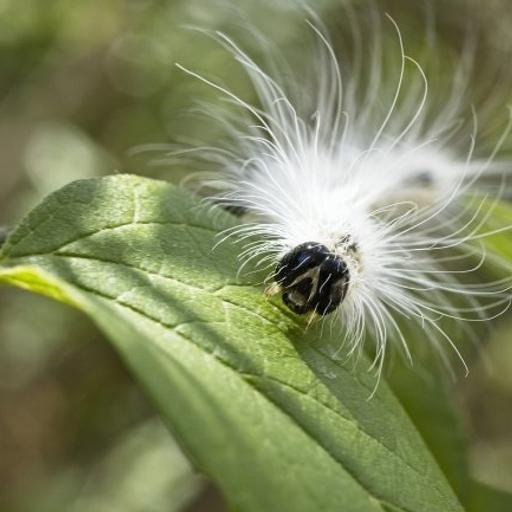
Every summer, large sacks of caterpillar silk appear in trees across much of North America. They’re the communal home of Fall Webworms, and they’re not pretty - full of caterpillars, their poop (frass), and dead leaves. But, y’know, those sacks are full of something else - fascinating nature facts! And in this episode, Bill and Steve dive into the messy but engrossing world of Fall Webworms (they put the gross into engrossing).
This episode was recorded at Taylor Road Park in Hamburg, NY on September 28, 2026.
Links
Wild Ideas: The Podcast Archive
Episode Notes
Do fall webworms prefer the canopy, forest edge, or forest interior?
During the episode Steve wondered about where fall webworms hang out most often. Bill didn’t come across the info in his research prior to recording, but, afterwards, he found that since their webs are usually built near the end of branches, they seem to do better along forest edges, roadsides, river corridors, and other more open areas.
One reason may be sunlight. Research has shown that fall webworm webs can become a whole lot warmer than the surrounding air when they are in the sun. So, living on an exposed branch or along a forest edge could give the caterpillars a useful heat boost. There is less evidence that they specifically prefer the very top of the canopy, so “outer branches and edge habitats” is probably the best way to describe it.
How long do fall webworm moths live?
Not very long. Adult fall webworm moths usually live for just about a week, with studies generally finding lifespans in the range of ~5–8 days.
And the adults are strictly mating, egg-laying machines. They don’t even feed, living instead on energy stored during the caterpillar stage.
Is “polyvoltine” an acceptable term for having multiple generations per year?
When the guys were discussing voltinism (how many generations an insect has in a year) Steve guessed that the term for more than two generations a year was “polyvoltine”, and Bill shot back that, no, it was “multivoltine”. But then he looked into it after recording, and it turns out that Steve was not wrong.
Both “multivoltine” and “polyvoltine” are used in entomology, although “multivoltine” seems to be more common in the fall webworm literature. So, Steve was correct, but people saying polyvoltine probably bugs the hell out of fall webworm researchers.
Is permethrin related to beta-cypermethrin?
Yes. They are closely related insecticides. Both belong to a grou

