11 Jun 2026 04:00
Open Tab: Lachlan Cartwright
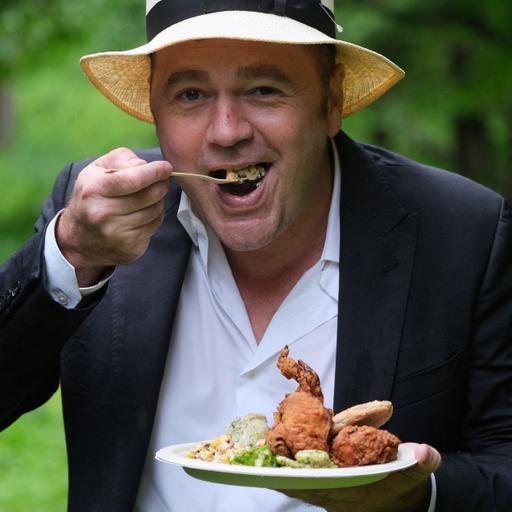
In this week’s Open Tab, Australian-born, New York–based muckraker Lachlan Cartwright sat down with Substack co-founder Hamish McKenzie to walk through two decades covering media, money, and power—from The Sun and the New York Post to executive editor of the National Enquirer, where he went from breaking news to becoming an anonymous source in one of the biggest political scandals of the decade. His New York Times Magazine cover story on the catch-and-kill operation that protected Donald Trump and Harvey Weinstein took a year to write and earned him multimillion-dollar legal threats in the process. These days he runs Breaker, the twice-weekly media newsletter and podcast he founded after years of people telling him to strike out on his own—it’s tabloid flair paired with the standards of the broadsheets and, as he puts it, a healthy appetite for fun.
Hamish: You’re a newshound, a scoop-getter, a news-breaker, and a tabloid journalist of sorts.
Lachlan: Allegedly.
Hamish: Cut from the cloth of an old-school type of reporter. And that’s kind of special in today’s world, because lots of people are just random opinionators and mouthers-off.
Lachlan: I’m an old-school newshound. Some would say a muckraker. I spend a lot of time meeting and greeting and ingratiating and sourcing. I always say I’m only as good as my sources, and that’s how I get scoops—being out and about, going out into the world and finding out new information. And then coming back, standing it up, tapping it up. And as we would say, putting it in the paper, which is now a newsletter.
Hamish: You were the number two editor at the National Enquirer, and through your work there you discovered that they were essentially paying for stories so that they could kill those stories on behalf of some powerful figures: Donald Trump, Harvey Weinstein.
Lachlan: That’s correct.
Hamish: Tell me, what was it like to write that story and have it out in the world? Because it was complicated, and it involved so much personal stuff and was a big risk for your journalism career.
Lachlan: And legally a big risk, because I was under, and still am, a nondisclosure agreement. That piece was easily the hardest piece I’ve ever had to write, and it wasn’t fun to write it. It’s fun now to have written it and to talk about it. I remember being at the ASMEs, the magazine awards, and it was right around the time that the indictment had come down against Donald Trump, the hush money indictment. I saw Jake Silverstein, the editor of the Times Magazine, there. I didn’t know him. I said, “G’day, mate. I think I’ve got a cracking yarn.” And he said, “Well, let’s follow up, and we’ll meet about it.” I sit down to write it and I thought, “I can’t do this.” I was getting out old files and I was looking through text messages to re-create scenes, and, as I write about in the piece, my father died suddenly during when all of this was happening. I just thought, I can’t go over this stuff again. It’s just too much for me. And for months, I just couldn’t get anything on the page. It actually took me a year to write. Willy Staley [story editor at the New York Times] said, “Why don’t we do this in chapters? You’re good at writing your column, your newsletter. Why don’t we write this in chapters?” And I finally had the confidence knowing that I didn’t have to file 10,000 words, I just had to file a chapter at a time. I sat down and I wrote the first chapter, and I thought, “Okay, I might be able to do this.” It went through the machinery of the Times. They go [para]graph by graph and give you the colonoscopy of fact checking. They call everyone, and they re-report basically the entire piece out. But it took a year for the whole piece to come together. And it’s easily one of the proudest