
15 Oct 2026 11:03
Tony Watts on the Mechanics of Tectonic Plates
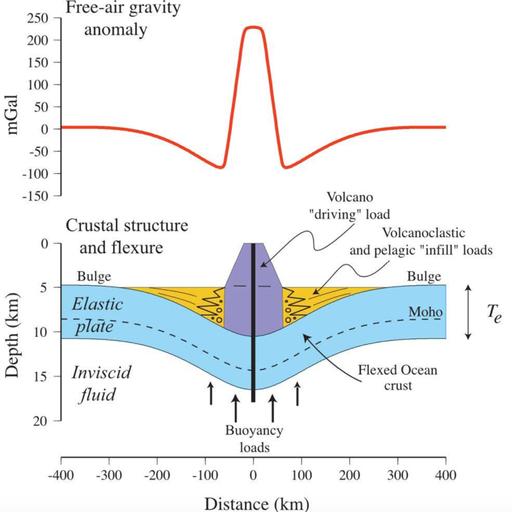
By the end of the 1960s, plate tectonics had been widely accepted, but it rested on an untested assumption: that the plates are strong enough to move as rigid slabs. Tony Watts describes how, as a postdoc at the Lamont-Doherty Earth Observatory in the early 1970s, he helped measure that strength by treating the lithosphere like an elastic beam bending under a load, first at ocean trenches and then at seamounts. The same approach has since been applied to sedimentary basins, where it called into question some estimates of past sea-level rise, as well as to ice sheets and to volcanoes on Mars. He closes with the questions that remain open, including why the plate seems thicker over short timescales than over long ones, and how new subduction zones begin. Watts is Emeritus Professor of Marine Geology and Geophysics at the University of Oxford.
For figures illustrating this episode, visit geologybites.com.

