
28 Oct 2026 11:00
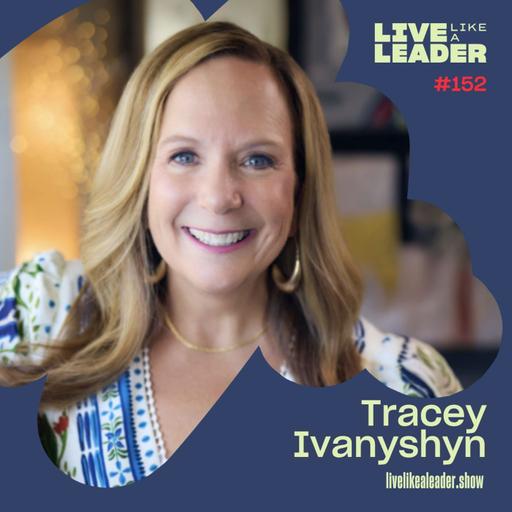
Tracey Ivanyshyn: Turning Grief and Kindness into Leadership Strength
Today, I sit down with Tracey Ivanyshyn, a serial entrepreneur, culture builder, corporate grief educator, death doula, and co-founder of Kindness at Work. After more than 25 years leading purpose-driven businesses and a team of over 100 people, Tracey has turned her attention to helping organizations build trust, belonging, and the capacity to meet loss with greater humanity.
Tracey and I met on Necker Island, where a remarkable group of people came together around Richard Branson and the work of Virgin Unite. We begin with some joyful memories from that time, but our conversation soon becomes deeply personal. I share what it was like to lose my father while I was struggling with clinical depression and anxiety following a serious infection. Tracey offers a thought that’s stayed with me: grief tends to wait. When we can’t face it immediately, it doesn’t disappear. It waits until we’ve got the capacity to feel it.
That understanding leads us into Tracey’s work helping companies learn how to support grieving employees. Most leaders haven’t been trained for these moments. They feel responsible for finding an answer, yet grief can’t be fixed. Tracey explains that often, our task isn’t to solve anything. It’s to witness, listen, and build systems that prevent a grieving person or overwhelmed manager from having to invent a response in the middle of a crisis.
We also explore her work as a death doula and the “goodbye year” she shared with her mother. Tracey helps families ask the questions we tend to avoid, preserve their love stories, and thoughtfully shape the final days of a person’s life. Her reflections raise two questions worth asking long before the end: Am I loved? Have I loved well?
What really stands out to me is how naturally this connects to leadership. Tracey draws a sharp distinction between being nice and being kind: niceness avoids friction, while kindness tells the truth with care. She saw that principle create loyalty, strengthen culture, and increase the value of the companies she eventually sold.
Now she and co-founder Fiona Stevenson are bringing that mission to the inaugural Workplace Kindness Awards, hosted at Nasdaq MarketSite in New York City on November 12, 2026, with Claude Silver as keynote speaker.
Key Takeaways
I was struck by Tracey’s insight that grief tends to wait. When other circumstances prevent us from processing a loss, the grief often returns when we’ve finally got room to feel it.
I learned that leaders don’t need to fix grief. They need the courage and presence to witness it, ask caring questions, and stay with someone in an experience that doesn’t have a simple answer.
Tracey’s framework moves organizations through three stages: grief awareness, grief literacy, and grief readiness supported by training, policies, and practical systems.
I loved her idea of creating an employee “operating manual” before a crisis, including how each person prefers to communicate and be supported during difficult times.
Small signals can remove enormous uncertainty. A blue or white flag on a desk or video-call background can tell colleagues whether a grieving person needs space or welcomes connection.
Tracey showed how remembrance can become part of workplace culture through the story of a two-sided memorial bench: one side for quietly connecting with a colleague’s legacy, the other for signaling a need for companionship.
Her work as a death doula demonstrates that thoughtful questions about sights, sounds, people, stories, fears, and unfinished conversations can bring greater intention to the end of life.
The questions “Am I loved?” and “Have I loved well?” aren’t just questions for our final days. Asking them now gives us time to change the answers.
I came away with an even clearer distinction between niceness and kindness. Niceness avoids discomfort; real kindness means telling the truth with care.
Tracey’s business experience shows that a people-first culture isn’t separate from performanc

